
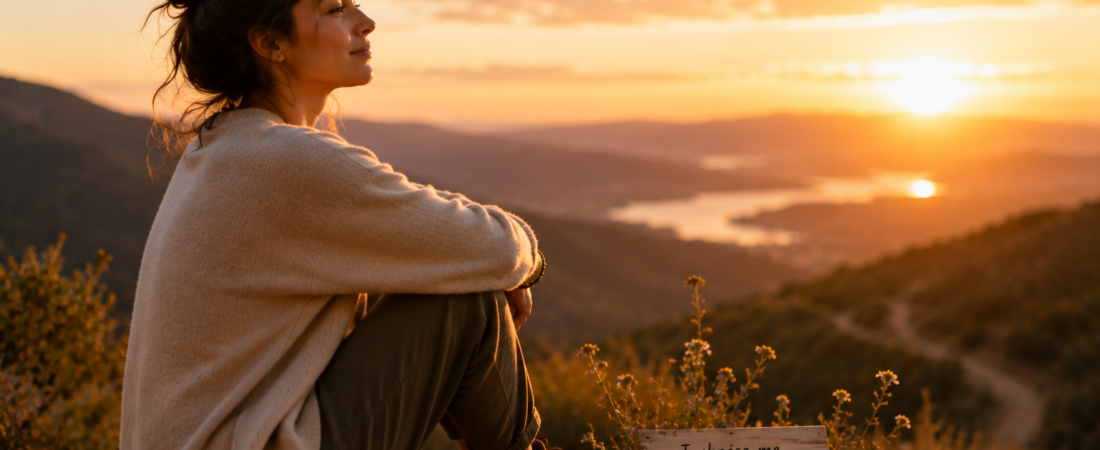
Learning to live without survival mode can feel surprisingly difficult after years of carrying more than anyone could see. For so long, you waited for the day when life would stop demanding so much of you—when the struggle would ease, the pressure would lift, and you could finally breathe. Now, in some real way, that day has come. Things are calmer, steadier, and safer than they have been in a long time.
So why does it feel so strange? Instead of the relief you imagined, there is a quiet unease. The peace you longed for feels unfamiliar, almost uncomfortable, as though you are wearing a life that does not quite fit yet.
If this is you, please know you are not alone, and you are not doing anything wrong. This adjustment is far more common than people realize. When you have spent years in survival mode, calm does not automatically feel like home. Learning to live without the constant fight is its own kind of work, and almost no one warns you that it is coming.
When Survival Becomes Your Normal
Survival mode is meant to be temporary. It is the state your mind and body enter when life becomes too much, a way of narrowing your focus to getting through whatever is in front of you. For a season, it protects you.
But when the hardship lasts for years, survival stops being a temporary response and quietly becomes a way of life. The stress, the vigilance, the bracing for the next problem all begin to feel like simply who you are.
Over time, this shapes everything. Your habits form around managing crises. Your expectations tilt toward assuming the worst, because assuming the worst once kept you prepared. Even your sense of identity grows around the struggle, until being the person who copes, who endures, who handles things, feels like your core.
None of this means something is wrong with you. It means you adapted, faithfully, to a life that asked you to. The difficulty is that the adaptation does not switch off the moment the danger passes. It lingers, long after it is needed, because your system learned that staying ready was how you stayed safe.
The Strange Feeling of Not Having to Fight
There is a peculiar discomfort that arrives when there are no immediate fires to put out. For so long, your days were defined by what needed solving. Now the urgent problems have quieted, and into that space comes a feeling you may not have expected. Restlessness.
Without a crisis to organize around, you can feel oddly unmoored. You might find yourself almost searching for a problem, sensing trouble where there is none. Your nervous system, used to staying alert, does not always trust the quiet.
Guilt can show up here too. After surviving so much, you might feel that you have no right to struggle now that things are easier. You compare your discomfort to your past hardships and tell yourself you should simply be grateful.
But this transition is not ingratitude, and it is not weakness. It is the very natural disorientation of a person who spent years bracing and is now being asked to stop. The fight became familiar. Its absence, for a while, can feel stranger than the fight ever did.
Discovering Who You Are Beyond Your Struggles
When so much of your life has been about survival, it is easy to build your identity around what you have endured. You become the strong one, the survivor, the person who got through what others could not imagine. There is real dignity in that.
But it can also leave a quiet question once the struggle fades. If you are no longer fighting, who are you? When hardship has been the center of your story for so long, it can be unsettling to realize you are not sure what fills the space it leaves behind.
This is an invitation, even if it does not feel like one at first. You get to discover the parts of yourself that survival never had room for. What do you actually enjoy? What are you curious about? What do you value, dream of, or feel drawn toward when no emergency is demanding your attention?
Building an identity around your interests, your values, and your growth rather than your wounds takes time. You spent years knowing yourself through what you overcame. Now you get to know yourself through what you love. That is a slower, gentler kind of self-discovery, and it is one you deeply deserve.
Learning to Live Without Survival Mode Takes Time
Here is something that surprises many people in healing. Rest, joy, connection, and ease are not always things you simply step back into. After years of survival, they can feel like skills you have to relearn.
Rest may feel uncomfortable at first, even guilt-inducing, because some part of you believes you should always be doing something useful. Joy can feel unfamiliar or even unsafe, as if letting your guard down invites disappointment. Connection may feel vulnerable after so long spent protecting yourself.
Be patient with yourself as you practice these things. Let rest be something you slowly grow comfortable with, rather than something you have to earn. Let small moments of joy in without bracing for them to be taken away.
These are not indulgences. They are the building blocks of a life worth living. You are not failing at them. You are learning them, perhaps for the first time.
Building a Life Instead of Enduring One
There is a meaningful difference between getting through life and actually living it. For a long time, getting through was all that was possible, and that was enough. It kept you here. But you are allowed to want more than endurance now.
Merely surviving is reactive. It is shaped entirely by what is happening to you. Living is something you participate in. It means making choices not just to avoid pain, but to move toward what gives your life meaning, color, and warmth.
This shift does not happen all at once. You build a life slowly, in small and ordinary decisions. Choosing something because it brings you joy, not just because it is necessary. Making room for a relationship, an interest, or a dream you once had no space for.
You do not have to construct a perfect or impressive life. You only have to begin, gently, to create one that feels like yours. A life that is meaningful rather than merely manageable is built one small, intentional moment at a time.
Giving Yourself Time to Learn How to Live
If you feel unsure how to live without survival mode, please hear this clearly. You are not failing. You are learning something entirely new, something you were never taught and never had the chance to practice.
For years, your energy went into making it through. Now you are being asked to do something different. To rest. To enjoy. To build. To live. It makes complete sense that this feels strange, and your uncertainty is not a flaw. It is the honest beginning of learning a new way to be.
Be gentle with yourself in this season. The skills of living can be relearned, slowly and with patience. The peace that feels unfamiliar today can, in time, become the place you finally call home.
You already proved you could survive almost anything. Now, at last, you get to do more than survive. You get to live, and you have every right to take that as slowly and tenderly as you need.